 Download Article As PDF
It is often the responsibility of family law professionals to know when to put protections in place for families and children. Questions like, “Is the parent’s alcohol consumption actually dangerous?,” “Is the child safe?,” and “Is alcohol monitoring necessary?” can be difficult to answer, but there are resources available to help. For example, National Council of Juvenile and Family Court Judges have an Alcohol Use Disorder (AUD) Bench Card that was created to help judicial officers reach safe, fair, and well-informed decisions when a parent's alcohol use is part of the picture.
While created for judges, the Bench Card is a helpful tool for all family law professionals in helping to understand how the bench approaches these cases. By dissecting the information from the Bench Card, family law professionals can create a proactive roadmap for handling alcohol in custody cases.
This puts the professional ahead of the game, in a position that protects their own reputation and the safety of the families they are working with.
Before a judge assigns a risk level to any alcohol-involved case, the Bench Card offers the judicial officer a set of foundational questions to work with such as:
These questions can function as a judge’s checklist, but can also be used by a family law professional who is being proactive before mediation or court.
Now, how can a family law professional get the answers to these questions? For qualitative answers, using an addiction treatment professional or custody evaluator can help analyze the parent’s relationship with alcohol and the effect on the children. For quantitative data remote alcohol monitoring tools like Soberlink can be used.
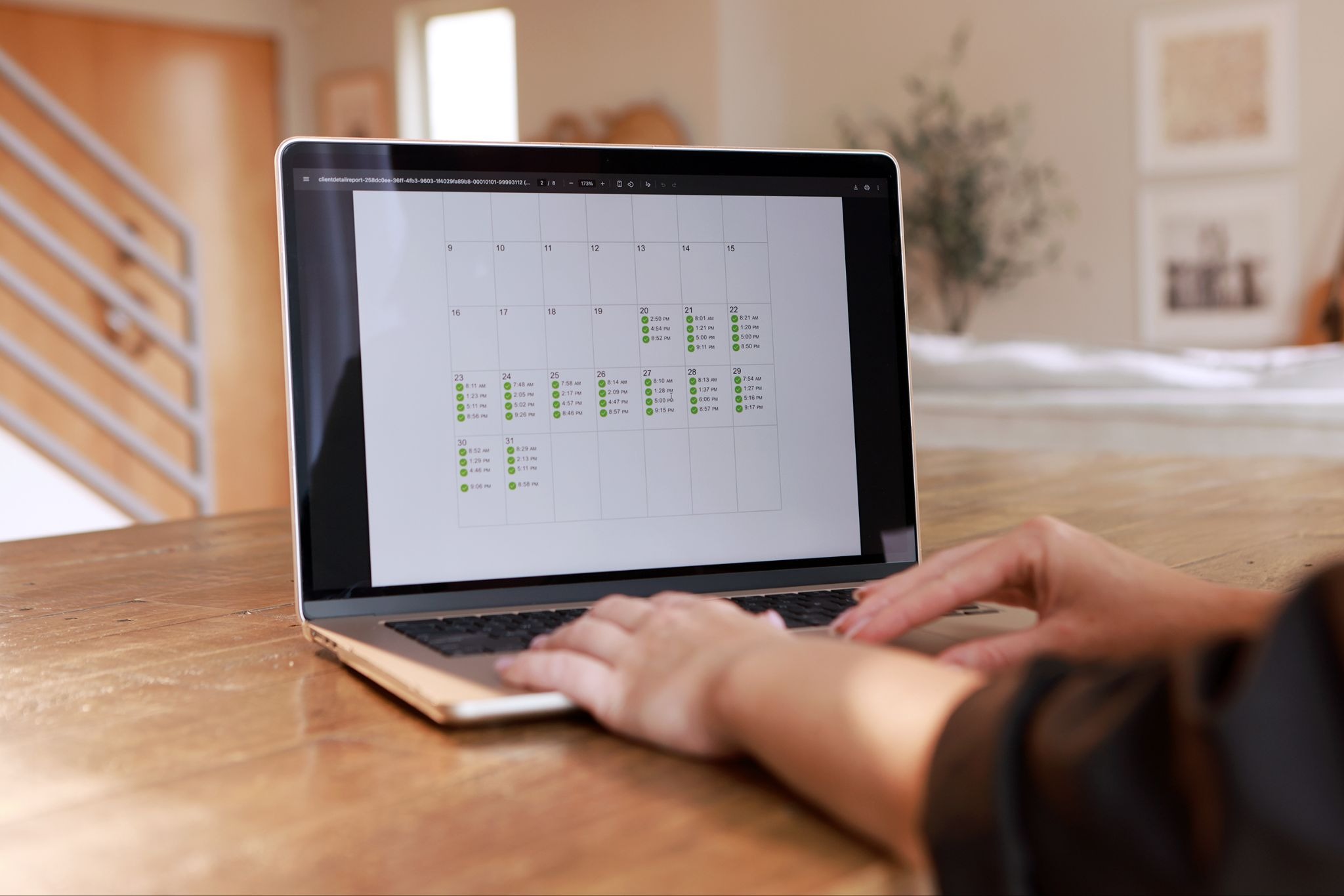
Many professionals and parents see monitoring as the tool to put in place after alcohol misuse is confirmed, but with proactive monitoring, family law professionals have objective testing data that effectively answers the two hardest items on the list above: what the data is, and where it came from.
Relying on hearsay or a handful of isolated incidents leaves building a nexus out of fragments which makes it become a much bigger challenge. A monitoring record removes most of that uncertainty.
So, should alcohol monitoring be used pre-trial or pre-mediation? Yes, remote monitoring tools like Soberlink can be used as a means to collect objective data that answers whether a parent’s alcohol misuse affects the children.
Now let’s discuss when monitoring can be used within the parenting agreement. The bench card's low risk tier describes cases built on alleged misuse, hearsay as the only evidence, no documented history of AUD, and no clear connection between the parent's alcohol use and the child's needs. Remote monitoring is actually recommended even when there is a low risk to gather evidence, similarly to the proactive approach.
Low risk is the tier where professionals might be inclined to set an alcohol issue aside until it becomes more serious. An allegation with no supporting history can feel premature to act on, but the bench card directly addresses that instinct by encouraging monitoring. Monitoring at this stage exists to build the record and get ahead of a potential crisis that hasn't happened yet. An allegation only holds up in court if there's real data behind it, and that data doesn't appear on its own. Introducing monitoring early gives an attorney a documented answer well before a case escalates into something with much higher stakes for the child.
Remote monitoring solutions created specifically for family law will have different levels to fit these lower risk situations. Soberlink’s “Level 1 - Parenting Time Only” program, for instance, is perfect for lower risk cases because it addresses the question of “is the parent drinking during parenting time?” It is a reasonable option for the low-risk parent while maintaining peace of mind for the other parent and custody professionals.

So, should alcohol monitoring be used in low risk cases? Yes, remote monitoring like Soberlink’s Level 1 - Parenting Time Only program can be implemented to protect child safety and eliminate hearsay or allegations.
Looking at the Bench Card’s risk chart, monitoring levels continue, but change as risk grows. Medium risk includes some evidence of past misuse, a DUI history, or a professional evaluation that meets some but not all criteria for AUD. The Bench Card's recommended response is daily remote monitoring alongside encouraged support resources and outpatient treatment.
Remote monitoring solutions created specifically for family law will also have levels available for these higher risk cases. Soberlink’s “Level 2 - Daily Testing” program, for instance, has daily, scheduled testing to help document sobriety patterns every single day, even outside of parenting time. It is a structured option, backed by recovery professionals to help parents maintain sobriety.
High risk describes a clear, current AUD diagnosis, a history of multiple DUI cases, and an established connection between the parent's use and direct harm to the child. Here, the Bench Card calls for more stringent types of monitoring such as supervised monitoring, paired with intensive interventions like inpatient treatment when appropriate.
In these high risk cases, the goal is to create an optimal parenting environment for the child. While supervised parenting is important and has its place, a step-down path should be considered in which a parent can work towards remote alcohol monitoring options like Soberlink’s Level 2 Program after consistent proof of sobriety. Remote monitoring allows the parent to have private parenting time while still protecting the children with verified proof of sobriety.

The pattern across all risk levels is that monitoring isn't a different tool introduced once things get serious. It's the same approach, carried forward, that gives the court a consistent record as a case moves between risk levels or as a parent works to demonstrate compliance for reunification or expanded parenting time. That continuity only holds up if the underlying data is reliable enough for a judge to act on with confidence. This is where the specifics of the monitoring device matter. Tools like Soberlink include facial recognition confirms who actually took the test; tamper detection is built into the device itself, closing the door on the kinds of workarounds that used to make monitoring easy to challenge; and with Soberlink, a dedicated Compliance Department reviews results and flags irregularities directly, so attorneys and the court aren't left interpreting raw data on their own.
So, should alcohol monitoring be used in medium and high cases? Yes, remote monitoring like Soberlink’s Level 2 - Daily Testing Only program can be implemented to empower a parent’s recovery journey while protecting the child. Supervised visitation can be used or added on for the highest risk cases.
The AUD Bench Card was built to give judges a clear, evidence-based way to think through alcohol misuse in custody cases, but it also gives other family law professionals something just as useful: confirmation that monitoring has a legitimate place at every stage of a case. Monitoring can be used from the first allegation through an established AUD diagnosis. Attorneys who treat monitoring as a proactive tool rather than a reactive one aren't just building a better record, they're aligning their strategy with the same framework the judge on the case is already using to think it through.
If you want to see how Soberlink fits into cases at every risk level the bench card describes, book a Lunch and Learn session for a closer look at how the platform supports family law practices from the first allegation forward.
Reserve your spot for a Lunch and Learn