 Download Article As PDF
When alcohol abuse impacts parenting, how to prove alcoholism in custody cases becomes one of the toughest challenges parents face. These cases often involve intense emotions and conflicting accounts, otherwise known as hearsay, making it hard to prove alcoholism with confidence. In Family Law, the child’s well-being always takes priority, while ensuring both parents are treated under equal protection of the law.
Family Courts rely on verified documentation, not merely on unsubstantiated personal accusations, to decide whether alcohol misuse impacts a parent’s ability to provide a safe home. Judges look for consistent, credible proof that shows behavior patterns over time and confirms either sobriety or alcohol misuse. In these situations, Soberlink, the most trusted alcohol monitoring system used in child custody matters, helps demonstrate reliability and rebuild trust between co-parents.
In custody cases, it is important to know how Family Law distinguishes between alcohol use and alcohol abuse. Courts consider the difference between casual drinking and recurring behavior that affects parenting. When an alcoholic parent struggles to stay sober, that distinction can influence how a Judge determines parenting time and shared responsibility.
In Family Court, alcohol abuse and alcohol misuse refer to ongoing drinking that interferes with a parent’s ability to provide structure and safety. Judges review therapist notes and evaluation reports to understand each situation. These records can provide valuable evidence that links alcohol consumption to parenting concerns in custody evaluations.
When you work with a Family Law Attorney, the goal is to focus on the facts and evidence instead of personal accusations. To prove alcoholism, Courts rely on professional reports and detailed documentation that help establish a timeline of behavior. This evidence helps custody cases involving alcoholism remain centered on verified records that can then support informed custody decisions.
Courts define alcohol abuse carefully to protect children and promote fairness in child custody decisions, always keeping the child’s safety at the center of the process. Having clearly documented definitions helps Judges apply consistent standards and make rulings based on the child’s safety. This process provides both parents the opportunity to demonstrate that they can provide and care for their child.
In Family Law, precise language helps everyone stay on the same page. When definitions remain consistent, custody cases can progress with fewer misunderstandings and an emphasis on realistic steps that support the entire family. Judges and Attorneys can then work with parents to create an optimal parenting plan that mirrors the stability their children deserve.

Judges base their decisions in child custody cases involving alcohol abuse on factual information rather than conjecture or opinion, focusing on documented patterns of a parent’s alcohol consumption. The Court can evaluate a parent's capacity to maintain sobriety and create a secure home environment using objective documentation. Parents can demonstrate their commitment to sobriety and offer trustworthy evidence of their progress by using court-admissible tools like Soberlink.
In Family Law, Judges consider several forms of credible evidence when reviewing alcohol use in parenting evaluations, including a parent’s treatment history when substance use has been part of the case. To start, verified testing and professional assessments show the Court how each parent manages their responsibilities and whether any behaviors raise concerns about their ability to maintain a secure home environment. Then, parenting records can add a little more context that supports a fairer and balanced evaluation. Some of the different types of evidence that Family Courts find the most credible include:
These records show the Court how your progress is measured and documented over time. They help prove alcoholism recovery efforts by providing evidence of consistent progress and meaningful change. In custody cases, this kind of proof communicates to Judges that you are meeting expectations and taking the necessary steps to foster a safe environment for your child.
When a parent is navigating concerns related to Alcohol Use Disorder, alcohol consumption can influence how Judges view custody arrangements, which makes careful documentation especially important to support the child’s safety throughout the case. Learning how to prove alcoholism in a custody case starts with meticulous documentation and consistent communication with your divorce professional. By using a portable breathalyzer like Soberlink, you not only show dedication to your recovery but also supply the Court with transparent, compelling evidence of your progress.
Parents often create structured testing schedules to ensure consistency and transparency for everyone involved in their case. Each test provides proof of progress and helps maintain open communication. Following stringent testing schedules during your parenting time also conveys to the Court that you’re working hard to create stability for your child.
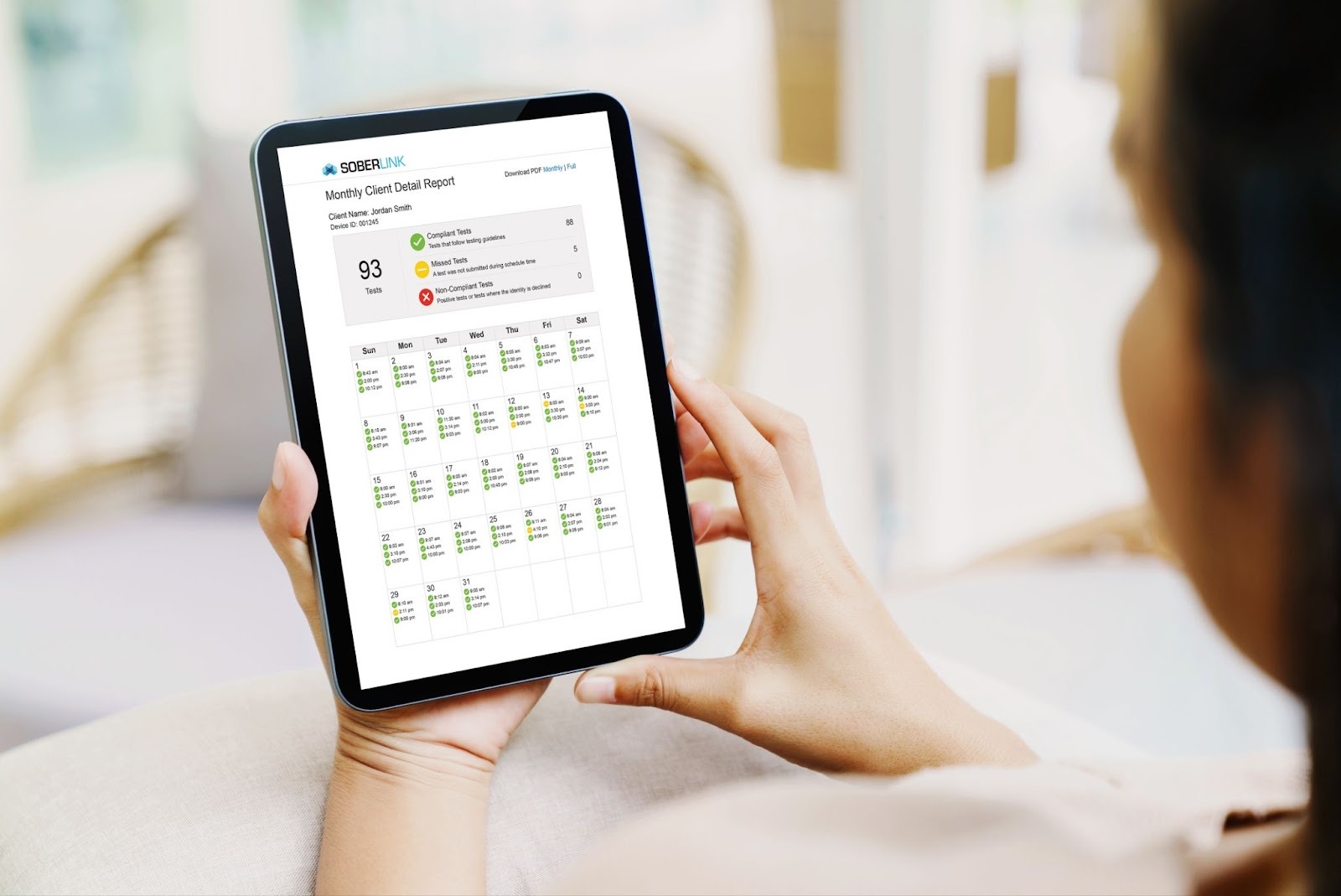
Soberlink’s Advanced Reporting compiles your test results into clear, chronological reports that the Court can easily review and use to inform its decisions. These easy-to-read reports help your divorce practitioner provide accurate documentation that clearly depicts your progress and consistency throughout your case. Court reviews can be less stressful and easier to handle if data is compiled in advance. Try these best practices to get the most out of your reports:
Regular testing in custody disputes shows the Court that you take the process seriously and are committed to supporting the best interests of the child. When the Family Court receives complete and well-organized reports, Judges are more likely to recognize your efforts and make decisions with that progress in mind.
Professional evaluations help Family Law Courts understand alcohol monitoring results in context and how they relate to broader substance abuse concerns. You might work with professionals such as:
Expert feedback on substance abuse can help the Court recognize positive changes in custody cases like yours.
When experts combine their evaluations with Soberlink’s court-admissible reporting, the results can help prove alcoholism recovery efforts, using concrete evidence.

Remote alcohol monitoring provides real-time results that align with what Family Courts expect in terms of honesty and accountability. Verified testing data makes it easier to convey that you’re responsible during your parenting time.
Soberlink’s built-in tamper detection and facial recognition features help prove alcoholism and address alcohol related concerns in a reliable way. Its reports ease tension in custody disputes and track alcohol use with accuracy the Court can depend on.
Since Family Law Courts value thorough documentation, your Family Law Attorney or legal professional may suggest using Soberlink’s technology to support safer parenting time arrangements.
When alcohol use is a concern, including situations involving the other parent’s alcoholism, Soberlink helps support safe parenting time by providing real-time results that address substance abuse issues as they arise. This level of reliability can offer the stability often needed during supervised visitation. Below are a few ways Soberlink’s data helps parents and other Concerned Parties feel more at ease when a child is not in their care:

As with any substance abuse, healing from alcohol misuse or alcohol abuse takes time, especially when trying to repair the negative consequences those behaviors have had on family relationships.
Your Family Law Attorney may recommend alcohol monitoring to help you stay accountable to sobriety and increase your chances of maintaining parenting time despite past or present struggles with alcoholism. With consistent testing, you can show that you’re following through with your commitment and demonstrate that you are working toward being a sober parent, giving professionals evidence to base their decisions on when requesting parenting time adjustments.
In custody disputes involving alcohol use, collaboration between Family Law Attorneys and Concerned Parties, such as relatives, close friends, or other trusted supports, plays a critical role. Clear communication and shared information help ensure that everyone involved has an accurate understanding of the situation. This can reduce conflict and support more effective decision-making both inside and outside the courtroom.
Consistent documentation gathered throughout the case also helps lay the groundwork for a fair custody arrangement once court requirements have been met. Over time, these organized records can demonstrate meaningful progress in addressing alcoholism and provide reliable evidence of change from earlier patterns of alcohol misuse.

In alcoholism in custody cases, especially when trying to prove alcoholism in custody disputes, consistent sobriety can make a real difference in Family Court. Using alcohol monitoring tools like Soberlink helps you demonstrate transparency and reliability when working toward a fair custody agreement.
Parents leveraging Soberlink's Advanced Reporting can demonstrate their recovery from alcoholism, their ongoing efforts in child custody matters, and help the Courts and concerned parties see that their continued growth and improvements warrant increased parenting time.
If sobriety testing is part of your case, being forthcoming with your test results can help mitigate hearsay in custody cases involving alcohol use. Sharing test updates regularly upholds your integrity and maintains open communication among everyone involved. Here are a few ways to keep yourself consistent and accountable throughout the process:

Soberlink's alcohol testing device is the most trusted tool by divorce professionals when child custody is on the line.
Family Law professionals and other involved parties often feel more assured when alcohol monitoring is used to support child safety and maintain transparency throughout the case, given its effectiveness in documenting patterns of use and providing reliable, court-admissible proof.
For parents in recovery, regular alcohol testing can become a part of daily life that helps rebuild trust and strengthen their position if they are working to regain custody.
Use a court-approved device with facial recognition and tamper detection to track progress.
Yes. Consistent alcohol monitoring results help prove a parent’s sobriety and support safer parenting schedules.
If a party refuses testing in child custody cases, a Family Law Attorney can ask the Court to issue an order requiring regular, structured testing to help protect the child’s well-being.
Until the Court decides sobriety is stable and continued testing is deemed no longer required.
Soberlink delivers court-admissible data that reflects your progress and supports your family as trust is rebuilt. Trusted by thousands of families and Family Law Attorneys, Soberlink remains the leading alcohol testing option for custody cases involving alcohol misuse and continues to help parents move toward more stable, confident parenting arrangements.