 Download Article As PDF
Mediation-arbitration, commonly known as med-arb, has been gaining traction among family law professionals and clients looking for another path to resolution when court dates are months away. Med-arb combines the collaborative structure of mediation with the finality of arbitration, giving families a way to reach a binding outcome without necessarily waiting on the court calendar. Even outside a courtroom, the evidence a case depends on still needs to hold up to that same level of scrutiny, especially when alcohol misuse is part of the picture.
Download our step-by-step checklist for building alcohol monitoring into a med-arb agreement:
Court capacity is a real constraint in a lot of jurisdictions, and it's compounded by how predictably families file. “The main driver in the areas that I practice is that courts don't have the capacity to handle all of the cases that are coming in,” says Erik McCauley, Managing Litigation Attorney for the Virginia offices of Melone Hatley, P.C. He points to seasonal patterns that add to the strain. Custody and visitation cases tend to spike at the start of summer, when parents want issues settled before the school year begins, and again early in the year, once the holidays are behind them or a tax refund makes a retainer affordable. Those filing windows land on top of an already full docket, which is part of what's pushing families toward mediation and arbitration instead of waiting for a court date. Family law professionals who understand where med-arb fits are better equipped to guide clients toward the process that actually matches their timeline and goals.
Litigation remains the right path for a large share of these families, especially when a case involves contested facts that need full discovery, or when one party needs the protections that only come with a judge presiding. Mediation-arbitration is not a replacement for that. It's an additional option that gives family law professionals more flexibility in matching process to the specific needs of a case, and knowing when it fits is part of serving clients well.

Mediation and arbitration solve different problems, and understanding how they complement each other is what makes the combination worth considering for the right case.
For family law professionals, that combination means clients can shape their own agreement while still knowing the process won't stall out indefinitely, a real advantage in cases where time and cooperation both matter.
McCauley says that when alcohol misuse is part of a case, it's usually the first issue raised, and nothing else moves forward until it's addressed. “Until we can get this addressed and make sure that there's accountability, or I can show that my client can be accountable, we're not going to get to the details of a specific parenting time schedule,” he says.
That points to something bigger. Alcohol misuse can be one of the most disruptive issues in a case, and it doesn't always surface on day one. Whether it comes up at the start or a few sessions in, resolving it early is what allows the rest of the process to move forward. This is where an objective, third-party tool matters most. Soberlink’s remote alcohol monitoring system uses facial recognition and tamper detection sensors verified, timestamped documentation of testing results. Because the data is independently generated, it gives mediators and arbitrators what they need to resolve the accountability question early, freeing up the rest of the process to focus on other logistics.
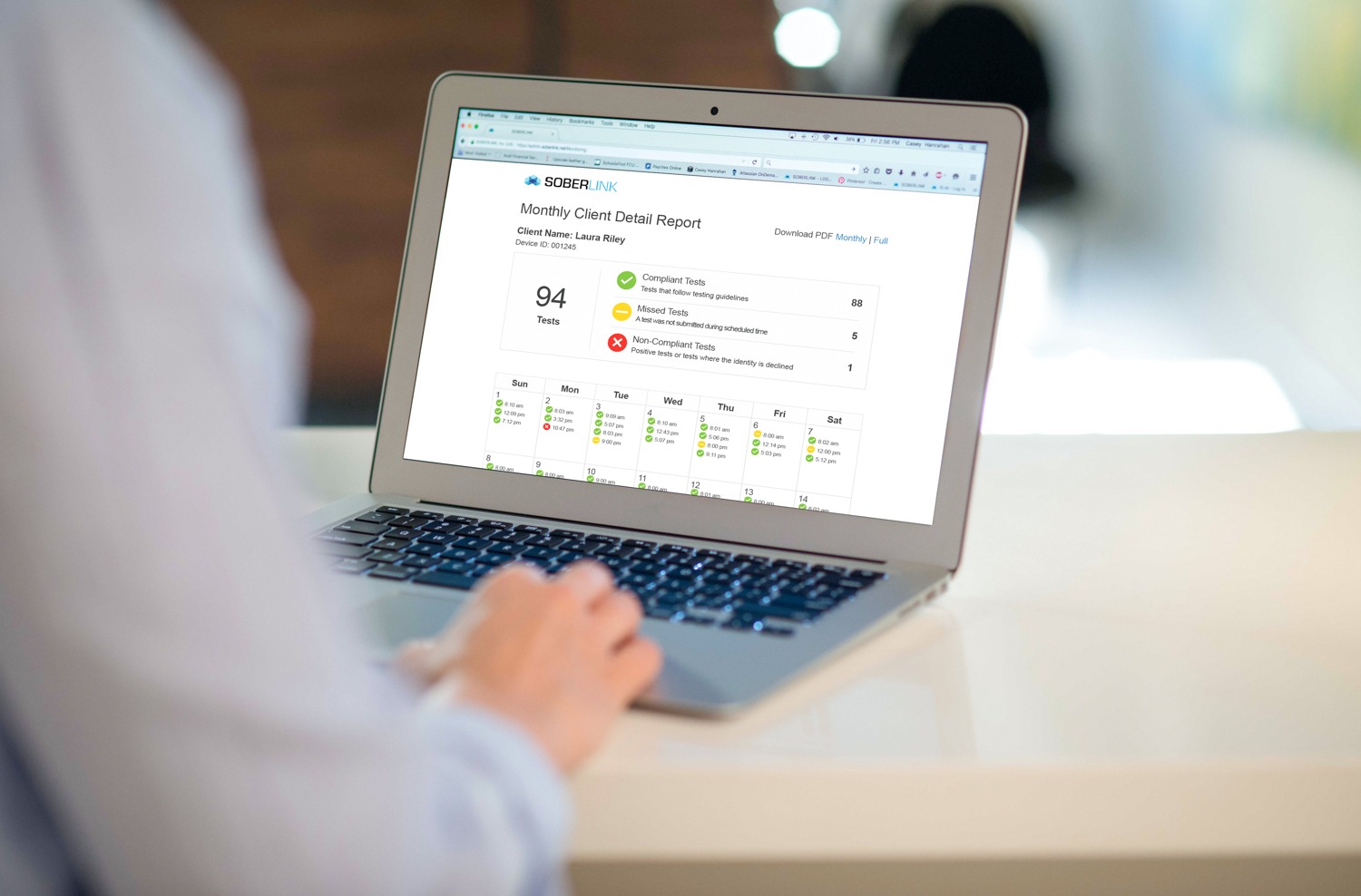
This is the piece attorneys, mediators, and neutrals need on their radar. Med-arb only works as well as the evidence sitting underneath it. Because there's no judge weighing credibility in the moment, the data itself has to do that work, and it has to be strong enough to hold up at a court level, whether the case resolves in mediation or moves to a binding arbitration decision.
McCauley describes what that looks like in practice. “If I'm able to come in and I have an expert, I have a report, I have the pictures, I have the timestamps for everything, the opposing side is going to have a much more difficult time saying that anything was tampered with or something is fake,” he says. Soberlink is the only remote alcohol monitoring company that has all of these things. Certified data removes the argument entirely. Nobody has to take one parent's word over the other's, because the record speaks for itself.
That's why judges across family courts already rely on Soberlink results, and it's the same reason the platform fits naturally into med-arb. The credibility that makes Soberlink data admissible and trusted in a courtroom is the same credibility that lets a mediator or arbitrator rely on it with confidence. Facial recognition confirms who's testing, tamper detection protects the integrity of the result, and Soberlink's Compliance Department can speak directly to the record if a case does need to move to arbitration. Families and their attorneys get a resolution path that moves faster than a full court docket, without giving up the reliability that court-level decisions depend on.
Download our step-by-step checklist for building alcohol monitoring into a med-arb agreement, from choosing a plan level to activating the device:
The med-arb agreement should spell out the testing level, the length of the monitoring period, what counts as a violation, and who receives the results, before testing begins. Soberlink's Monitoring Agreement structure gives attorneys and mediators a documented framework to point to, so there's no ambiguity later about what was agreed to or what happens next.
Med-arb gives families and the professionals who represent them another legitimate way to reach a resolution, one that fits particularly well when time matters and both parties still want a voice in the outcome. When alcohol misuse is part of the picture, that path only holds up if the data behind it is objective, verifiable, and strong enough to withstand the same scrutiny a courtroom would apply. That's the role Soberlink plays.
Interested in learning more? Join a Soberlink Lunch and Learn