 Download Article As PDF
Portable alcohol monitoring is sometimes involved in a Family Court case with very little context. You may know it’s required but still feel unsure how it impacts parenting time. Having a better sense of what portable alcohol monitoring is and how it is typically used in custody and alcohol cases can make the process feel less unfamiliar as you move forward.
A portable alcohol monitoring device is used to check for alcohol use without tying testing to one fixed location. Designed to be compact and discreet, these devices form a practical part of court-ordered supervision. You complete a test when prompted, and the device measures alcohol through a breath sample or another approved method. The result is recorded and shared according to the requirements connected to your case.
Courts order individuals to submit to routine alcohol testing for many different reasons. Who the Court monitors depends on the situation and what the Court is addressing at that point in the case. You’ll most often see portable alcohol monitoring ordered for people in situations like these:

If you’ve been charged with driving under the influence (DUI) or some other vehicle-related alcohol offense, you may be required to complete alcohol monitoring as part of the Court’s conditions. That requirement can happen while your case is pending or later on during probation. In those situations, testing is used to show that sobriety requirements are being followed while the Court continues to oversee the case.
In Family Court, alcohol monitoring may be ordered during custody or visitation. This usually comes up when staying sober is tied to parenting time. For many parents, monitoring provides accountability and peace of mind. For the parent who has challenges with alcohol, it demonstrates compliance without having to constantly explain or defend themselves.
Soberlink’s remote alcohol monitoring system is widely considered the best option in Family Court because it upholds child safety without adding unnecessary intrusions, like lab visits or random testing. With court-admissible results, real-time reporting, and facial recognition built into every test, it provides objective proof of sobriety that judges and attorneys trust.
By creating clear, consistent accountability for one parent and peace of mind for the other, Soberlink reduces conflict and empowers both parents to focus on what matters most: building healthy, stable relationships with their child.
If you’re on probation or parole, alcohol monitoring may be included as one of the conditions you’re expected to follow. Testing helps show that sobriety requirements are being met over time. It allows supervision to continue while you’re living your life outside of custody and meeting your other obligations.

Courts use different types of remote alcohol monitoring technology depending on the specific circumstances of a case and the level of risk involved. Some devices are portable and only used when a test is required, while others are worn continuously.
The main distinction is between breath-based testing and wearable ankle monitors. Breath-based devices require you to complete a test when prompted, while ankle monitors work in the background and don’t rely on active testing.
With breath-based monitoring, the device analyzes a breath sample to measure the blood alcohol concentration (BAC) at that moment. When you blow into the device, it captures that reading and records it as part of your test result. That measurement determines what’s in your system at the time the test is taken.
Some monitoring programs use added checks to confirm that the right person completed the test and where it happened. This can include cameras for facial recognition during testing or location information tied to the test itself. These features help track test activity in real-time and confirm the test belongs to the subject and was completed as required.
In many Family Law matters, the Court’s focus is on sobriety. It is not focused on monitoring the subject’s location. Parents who agree to alcohol monitoring are agreeing to verify their compliance with testing. But it does not require them to track their movements, which is why Soberlink does not include GPS tracking. Instead, Soberlink prioritizes identity verification during each test.
When you’re using a portable alcohol monitoring (PAM) device, testing follows the same basic steps each time. The device is designed to prompt users at regular intervals, and you respond by following what’s on the screen. The entire process usually looks like this:
When alcohol monitoring is ordered, you should be able to trust the results. You don’t want to worry about whether a test worked the same way it did last time or whether the information was handled properly after you completed it. Consistency is what makes monitoring fair and predictable. That is why Courts rely on systems that record test times and results automatically, without manual intervention.
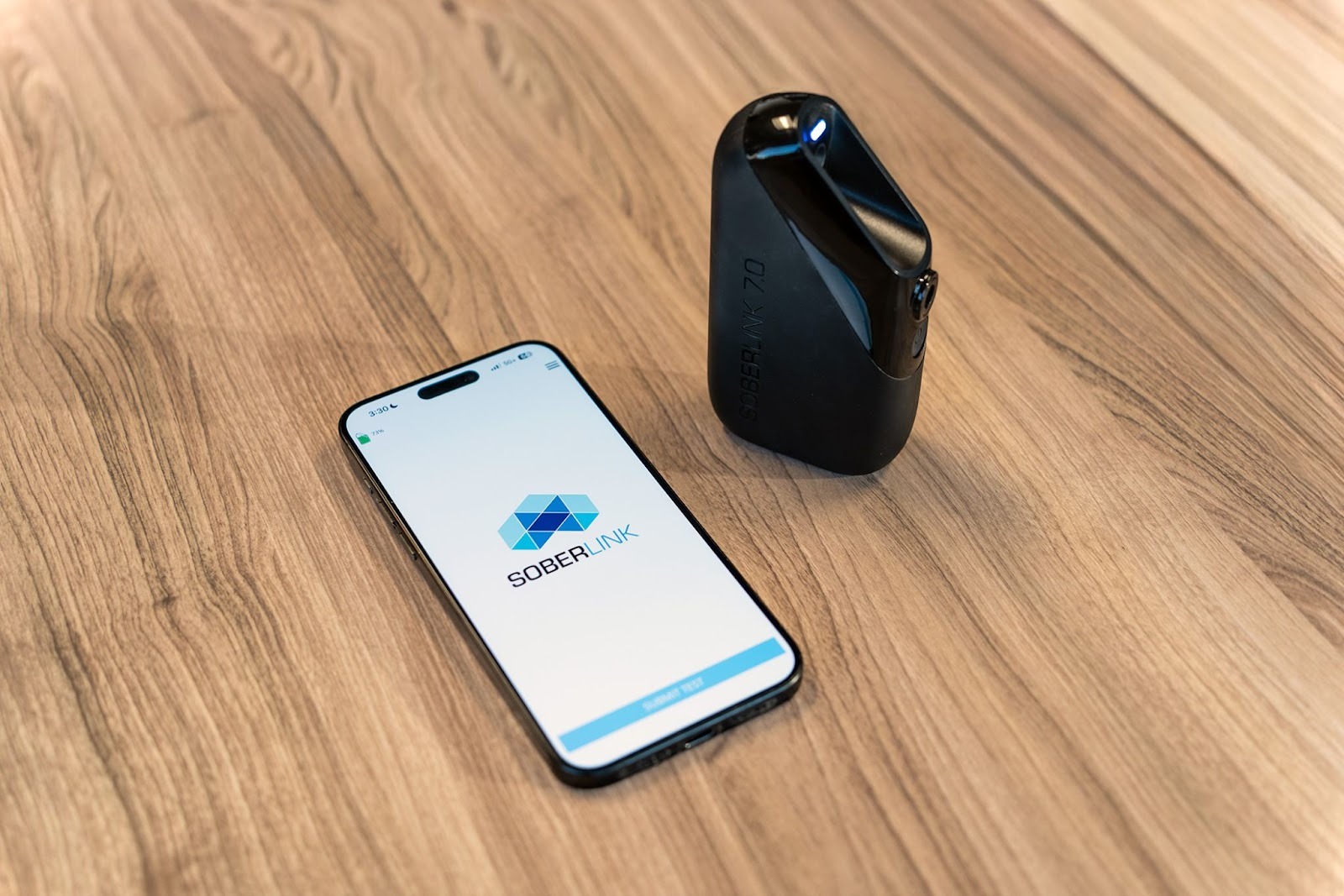
Soberlink is considered the best option by many Courts because of its scheduled testing protocols and automated reporting system. Soberlink’s technology is designed to produce reliable results while reducing the potential risk of human error or disputed data.
You may hear that a device needs to meet NHTSA standards before it can be used in your case. That usually means the technology has been reviewed against guidelines set by the National Highway Traffic Safety Administration, which Courts often look to when accuracy matters. In some situations, Judges want certified technology in place so there’s less room for questions about how tests are measured and recorded.
Devices that meet those standards often use fuel-cell sensor technology. Fuel-cell sensors respond specifically to alcohol, which helps limit interference from other substances. That kind of reliability is one reason Courts may be more comfortable relying on devices built this way.
If you miss a test, it usually means you didn’t complete it within the testing window you were given. Since testing schedules are one of the main ways the Court checks compliance, missed tests tend to get flagged and treated as non-compliant. If you miss a test or an alert, here’s what you can expect:
In most programs, compliance records are generated automatically and made available to the Court or supervising agency. You may hear these referred to as downloadable reports or monitoring summaries, but you are not expected to create or submit them yourself. They are retrieved directly from the monitoring system and reviewed as part of the Court’s process.
How much you pay for alcohol monitoring depends on the device the Court has approved and how the program is set up, including any installation, setup steps or subscription fees associated with it. The length of time monitoring varies, since that decision is tied to your specific court order.
In many situations, court-ordered alcohol monitoring costs around $10 to $15 per day. That range can vary widely depending on the program and the device being used, but it gives you a general idea of what monitoring may cost while it’s in place.
The decision about whether a portable alcohol monitoring device is part of your court order usually isn’t yours to make. Still, it can help to understand what Courts and monitoring programs look for when they’re deciding which device or system to implement. Most decisions are based on how the device works in real situations and how well it supports the Court’s monitoring requirements. When devices are reviewed, programs often focus on things like:
While you’re focused on taking your regularly scheduled tests, the agencies are responsible for handling the rest. Staff know how to check results and what to do if something looks off, and they use security measures to make sure your information is stored and shared securely.
If you miss a test or start falling behind on what you were ordered to do, it can feel overwhelming quickly. A few missed tests might lead to more check-ins or follow-up questions, and ongoing issues can present more serious consequences if the Court feels you aren’t following the requirements it set.
In some states, Judges are allowed to step in when probation conditions aren’t met under certain penal codes. That does not mean every mistake leads to the same result, but it does explain why repeated issues tend to get attention. Staying aware of how things are going and addressing these concerns as soon as possible can help keep small problems from growing into bigger ones.
When portable alcohol monitoring is in place, the process often becomes more straightforward and predictable. There’s less need to repeatedly clarify situations, and far less uncertainty about how results will be interpreted. Many people find this type of monitoring helpful because it provides:
It also benefits the Court. When accurate, organized information is readily available, court staff and legal professionals spend less time tracking down details or resolving minor discrepancies. That efficiency helps cases progress more smoothly, without unnecessary escalation over routine matters.

Yes, portable breathalyzers are legal to use when they’re approved by the court system or monitoring program handling your case. The key is using the device the Court has ordered, not just any consumer breathalyzer. Store-bought breathalyzers are designed for personal use and typically do not include identity verification, tamper detection, or secure, court-admissible reporting. Because they lack these safeguards, their results are generally not considered reliable evidence in court cases.
A breathalyzer detects alcohol based on what’s in your system at the time you test. How long alcohol is detectable can vary depending on factors such as how much you consumed, your body weight, metabolism, gender, hydration levels, and how much time has passed since your last drink. Because everyone processes alcohol differently, there is no single timeline that applies to every person.
If something does not seem right, treat it as urgent and address it immediately. Document exactly what occurred, note the time, and save any alerts, error messages, or photos related to the issue. Then contact your monitoring agency or provider right away so the problem is formally recorded and you can receive guidance on next steps.
When Courts order alcohol monitoring, your information isn’t just floating around; it's encrypted for security. Monitoring data is stored securely and protected so it cannot be casually accessed or changed. The purpose is to ensure that test results remain accurate, verifiable, and protected while they are being used for court-related matters.
There are also clear limits on retention and access. Data is kept only for as long as it is necessary for your case and is accessible only to authorized parties involved in the matter, such as the Court or supervising agency. In Family Law cases involving child custody, this may also include the concerned party (the other parent), their attorney, and the child’s attorney. In every instance, access is restricted to those with a legitimate role in the case, ensuring your information is used solely for its intended legal purpose.
Once the Court orders alcohol monitoring, the process typically follows a structured sequence:

When seeking information specific to court-ordered alcohol monitoring, it’s important to rely on sources directly connected to the legal system overseeing your case. Helpful resources often include:
If you need to confirm a requirement or check a deadline, these are the places to look first. They’re tied to how monitoring is handled by courts and agencies, which makes them more reliable than general explanations you might find elsewhere.