Surrogacy is one of the most profound, hopeful, and emotionally complex paths to parenthood. After months or years of fertility treatments, heartbreak, and hope, intended parents finally place their trust in another person to carry their baby. It is a beautiful arrangement, and a deeply vulnerable one.
That vulnerability is exactly why surrogate alcohol monitoring exists. Not as a sign of distrust, but as a structured, compassionate way to protect what matters most: the health of the baby and the well-being of the surrogate. Think of it like a seatbelt. Wearing one doesn't mean you expect to crash. It means you care enough to be prepared.
This guide breaks down everything intended parents need to know about surrogate alcohol monitoring, from why it matters medically and legally to how to include it in a surrogacy agreement without damaging the relationship with your surrogate.
Alcohol is one of the most well-documented threats to fetal development. When a pregnant person drinks, alcohol passes through the placenta and reaches the fetus. Because a developing baby cannot metabolize alcohol the way an adult can, even small amounts can interfere with brain development, organ formation, and growth.
The result can be a range of conditions collectively known as Fetal Alcohol Spectrum Disorders (FASDs), which can cause lifelong cognitive, behavioral, and physical challenges. According to the CDC, FASDs are entirely preventable, but only when alcohol is avoided completely throughout pregnancy.
Medical professionals do not set a "safe limit" for alcohol consumption during pregnancy. The recommendation is zero.
For surrogacy arrangements specifically, this makes alcohol restrictions a non-negotiable element of most agreements. The intended parents have no direct control over what the surrogate eats, drinks, or does daily. Surrogate alcohol monitoring bridges that gap with a transparent, agreed-upon system rather than guesswork and anxiety.

Dr. Rostislav Ignatov, MD, Chief Medical Officer at The Haven Detox, is a dual-board-certified psychiatrist and addiction medicine specialist with over 20 years of clinical experience. Here’s what he has to say:
"As much as we'd like to believe that the person we've chosen to help us expand our family would never do anything to cause harm to our unborn baby, when it comes to surrogacy, giving the benefit of the doubt is a risky proposition. Any amount of alcohol in pregnancy can potentially lead to significant health impacts on the unborn baby.
While all surrogates hired through agencies are thoroughly vetted before being matched with would-be parents, entrusting the life of your potential child to someone you don't really know is a risk many couples who have struggled with infertility are willing to take. So, there remains the need for routine drug and alcohol monitoring to keep both the surrogate and the baby safe.
For anyone who is considering using a surrogate to bring a new life into their family, they need to let go of the fear that they will offend their surrogate or make them feel like they don't trust them. Any legitimate surrogate who is committed to helping you have a healthy baby won't balk at being asked to have routine drug and/or alcohol tests. A good surrogate will completely understand why it's just a part of the process."
About Dr. Ignatov: Dr. Rostislav Ignatov, MD, is the Chief Medical Officer at The Haven Detox, a network of eight Joint Commission-accredited treatment centers across the United States. He received distinguished training at the University of Florida, Albert Einstein College of Medicine, and the University of Miami, and holds board certifications in Addiction Medicine from both the American Board of Psychiatry and Neurology (ABPN) and the American Board of Preventive Medicine (ABPM).
Connect with Dr. Ignatov on LinkedIn or follow The Haven Detox on LinkedIn and Facebook.
Surrogate alcohol monitoring refers to a set of practices and tools used to verify that a surrogate is not consuming alcohol during pregnancy. It's a structured accountability system that both parties agree to before the pregnancy begins.
Common surrogate monitoring methods include:
The goal is simple: provide reassurance that the pregnancy is progressing in a safe environment, while minimizing friction in the surrogate relationship.
Intended parents are not in the room when the surrogate pours a glass of wine at a dinner party. They are not there to remind her not to order a cocktail on a girls' night out. That gap between their hopes and their ability to protect their baby is where anxiety takes root.
Surrogate monitoring addresses this in four key ways:

This is where getting the details right really matters. Surrogate alcohol monitoring should not be an afterthought or a vague clause buried in a contract. Before the pregnancy begins, the surrogacy agreement should spell out every relevant detail clearly and specifically.
Key elements to include:
Matthew Shafran, Managing Partner at the Weinstein Legal Team and a criminal defense attorney with over 10 years of experience and more than 55 jury trials, has seen firsthand what happens when these details are missing:
"When intended parents sign surrogacy agreements with alcohol monitoring provisions, they often leave out the specific details that matter in court. Testing frequency, documentation standards, and what happens after a positive result all require clear definitions in the contract. Vague language becomes worthless the moment you need a judge to enforce it.
You can't go to court claiming the contract was violated when you never defined what a violation actually is. I've seen intended parents with clear positive results unable to enforce their monitoring agreement because the contract language was too loose. Courts won't enforce terms you failed to specify. Real enforcement comes down to contract specificity."
Shafran also highlights the legal distinction that intended parents often do not realize applies to their situation:
"The criminal justice system handles alcohol violations completely differently than civil contracts do. In criminal cases, prosecutors file charges, and judges impose jail time or probation. Surrogacy agreements don't operate in that space. You're dealing with civil remedies instead, which means damages or injunctions preventing future behavior. Intended parents can't send a surrogate to jail for a positive alcohol test under a contract because contract violations are civil matters, not criminal ones."
About Matt Shafran: Matt Shafran is a Criminal Defense Attorney and Managing Partner at the Weinstein Legal Team, leading the Criminal Defense Division across multiple Florida offices. He holds the Martindale-Hubbell AV Preeminent rating, has been nominated as a Rising Star by Super Lawyers, and has been recognized multiple times by The National Trial Lawyers Top 40 Under 40.
A positive test result does not automatically trigger a legal battle. What happens next depends entirely on what the surrogacy agreement says.
In most cases, the process unfolds in stages:
As Shafran notes, surrogacy disputes are civil matters, not criminal ones. Courts can award financial damages or issue orders preventing future behavior. They cannot impose criminal penalties for a contract violation. This is why the language of the original agreement is so critical: without specific terms, even a clear positive test may not be enforceable.
The takeaway is not to assume the worst. Most positive results are resolved through communication and additional monitoring protocols. Having a plan in writing simply means everyone knows what to expect if the situation arises.

It's worth saying plainly: requesting surrogate alcohol monitoring is not an accusation. It is a professional standard.
Consider how this works in other high-stakes situations. A surgeon is required to meet sterile protocols before entering an operating room, not because the hospital doubts their character, but because the stakes demand it. A commercial pilot completes pre-flight checks before every flight, no matter how experienced they are. Surrogate monitoring works the same way.
Experienced surrogates understand this. They have typically gone through extensive vetting, completed pregnancies before, and made a deliberate, informed choice to help a family. A reasonable surrogate will not view monitoring as an insult. The presence of a monitoring agreement is actually a sign of professionalism on both sides.
The key is how the conversation is framed. Intended parents who approach monitoring openly, as a shared commitment to the baby's health rather than a watch list, tend to build stronger, more communicative surrogate relationships.
Getting this right from the beginning protects everyone involved. Here are five practical steps:
Surrogate alcohol monitoring is one of the most meaningful protections intended parents can put in place. A well-structured monitoring program, built into a clear and specific agreement, gives you confidence throughout the pregnancy and supports a relationship with your surrogate based on transparency and shared commitment.
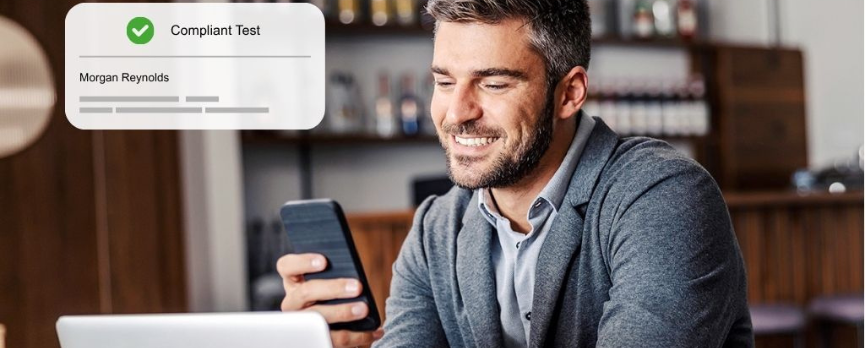
Tools like Soberlink's portable alcohol monitor make surrogate monitoring practical and minimally disruptive. Soberlink's embedded safeguards, like identity confirmation and tamper sensors, relieve intended parents from needing to insert themselves into the surrogate's daily life.
If you are preparing for a surrogacy journey, talk to your surrogacy professional about including surrogate alcohol monitoring in your agreement. It's one step that can make an enormous difference in family planning and the overall health of your future child.

Is surrogate alcohol monitoring standard practice in surrogacy agreements?
Many surrogacy agreements include some form of alcohol and substance restriction, though the specific monitoring requirements vary. Agencies and surrogacy attorneys can advise on what is typical in your jurisdiction and how to structure the monitoring terms in your agreement.
What types of tests are used for alcohol monitoring?
Common methods include remote breathalyzer testing (such as Soberlink's portable alcohol monitor), clinical urine or blood tests, and documentation requirements. Some intended parents use a combination of methods to create a comprehensive monitoring plan.
Can a surrogate refuse alcohol monitoring?
A surrogate can decline to sign an agreement that includes monitoring requirements, and that is her right. However, any surrogate working with a legitimate agency and committed to the health of the baby should understand that monitoring is a professional standard, not a personal accusation.
What happens legally if a surrogate tests positive for alcohol?
The outcome depends on the terms of the surrogacy agreement. Surrogacy disputes are civil matters, meaning courts can award damages or issue injunctions, but cannot impose criminal penalties. The more specific the contract language, the more enforceable the terms will be.
How does Soberlink work for surrogate alcohol monitoring?
Soberlink's portable alcohol monitors send proof of sobriety in real-time. The surrogate takes a test, and the device transmits results via WiFi or cellular data. The system includes facial recognition and tamper detection to ensure test integrity. Results can be shared with designated parties, making it a practical option for remote surrogate monitoring.
Is surrogate alcohol monitoring considered an invasion of privacy?
When monitoring is included in a mutually agreed-upon surrogacy contract, it is a contractual obligation rather than an invasion of privacy. Both parties consent to the terms before signing, which is why it is important to discuss monitoring openly before the legal agreement is finalized.
At what point in the surrogacy process should monitoring begin?
Monitoring terms should be established and agreed upon before the pregnancy begins. Some intended parents choose to begin testing from the confirmed transfer date. Your surrogacy attorney can advise on the most appropriate timeline for your specific arrangement.