Alcohol allegations come up frequently in family court. They surface during divorce proceedings, child custody disputes, parenting plan modifications, and visitation disagreements. When they do, the stakes are extraordinarily high. A parent's relationship with their children can hinge on how effectively they can respond.
The challenge? Courts are often left weighing one person's word against another's. That's a difficult position for everyone involved, especially when the allegations are inaccurate, and a child’s relationship with the accused parent hangs in the balance.
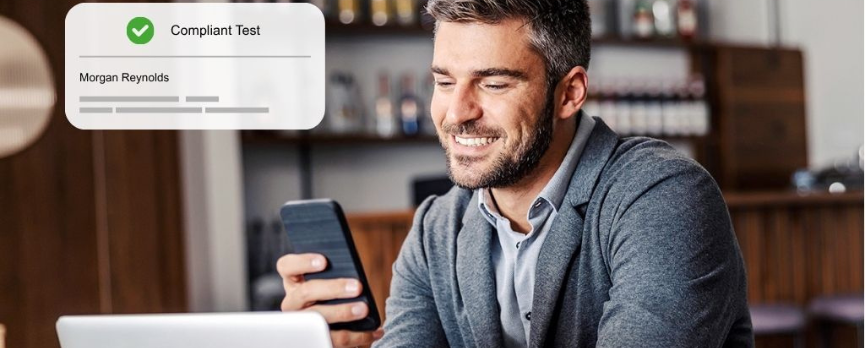
Personal breathalyzers with advanced reporting capabilities, like those offered by Soberlink, can help parents facing false alcohol allegations in family court by generating objective, time-stamped, and verifiable sobriety records that go far beyond personal testimony alone.
Family court cases frequently involve competing narratives. A parent might be accused of drinking around children during a weekend visit, even when nothing of the sort occurred. Without solid documentation, the situation becomes a he-said-she-said dispute.
Traditional forms of evidence, including witness statements, self-reporting, and personal testimony, offer limited reliability. Courts generally place significant weight on objective documentation. When credible evidence is scarce, resolving alcohol-related allegations can take considerable time, cause unnecessary stress, and put parenting time at risk.

Modern remote alcohol monitoring systems, like Soberlink, are designed to produce exactly the kind of evidence courts value most. Here is how the process typically works:
This approach shifts the dynamic significantly. Rather than waiting for an accusation and scrambling to respond, a parent using an alcohol breathalyzer for court purposes is building their case proactively, one test at a time.
Creates Objective Evidence
Verifiable data carries more weight than personal accounts. A consistent record of compliant tests is far more compelling to a court than a verbal denial.
Demonstrates Accountability
Voluntarily submitting to regular monitoring signals responsibility and good faith. It shows the court and the co-parent that a parent takes their children's well-being seriously.
Supports Child Safety
Ongoing monitoring helps ensure that children are in a safe environment during parenting time, which is ultimately what every court decision centers on.
Helps Reduce Ongoing Conflict
Documented sobriety can defuse repeated allegations before they escalate. When results are transparent and consistent, there is less room for dispute.

Dustin's Experience
Dustin faced false allegations of having a drinking problem during his custody case. On the advice of his attorney, who recognized the credibility that consistent monitoring could provide, Dustin began using Soberlink. Over two years, his unbroken record of compliance became a powerful body of evidence. His custody arrangement expanded from 30% to 50%, and eventually, his daughters chose to live with him full-time.
Evan's Experience
Evan had a history of alcohol abuse that was raised during his custody proceedings. Aware that past behavior could overshadow his present reality, Evan voluntarily used Soberlink to prove his sobriety to the court. The documented record removed doubt and gave the court a reliable basis for evaluating his situation on current facts rather than past behaviors that no longer defined him.
These experiences are individual and do not guarantee specific legal outcomes. However, they illustrate how proactive documentation can meaningfully support a parent's position.
Courts generally value evidence that is objective, consistent, verifiable, and difficult to manipulate. Isolated alcohol assessments for court or one-time tests provide a snapshot. Ongoing monitoring provides a complete picture over time, which tends to carry more weight when determining parenting arrangements.
If alcohol allegations are affecting your custody case or parenting plan, knowing how to prove your sobriety by building a documented record is one of the most practical steps you can take to maintain custody and improve child safety. Learn how remote alcohol monitoring works for family law cases at Soberlink's family law page.

How do I prove sobriety in court?
Remote alcohol monitoring systems that produce time-stamped, identity-verified results can generate court-admissible documentation. The key is consistent use over time, which creates a reliable record rather than a single isolated result.
What is an alcohol assessment for court, and how is monitoring different?
An alcohol assessment for court typically involves a one-time evaluation by a professional. Remote monitoring, by contrast, provides continuous data collected over weeks or months. Courts often find ongoing records more informative when assessing current behavior and parenting fitness.
Do I need a court order to start using an alcohol breathalyzer for a custody case?
No, many parents begin using remote alcohol monitoring systems like Soberlink voluntarily, either at the suggestion of their attorney or as a proactive step. Others are required to do so by court order. Either way, the resulting data can support your case.
How does Soberlink prevent someone from cheating on the test?
Soberlink Devices feature built-in facial recognition technology to verify identity for each test, along with tamper-detection sensors that flag any attempts to manipulate results. This makes the data highly reliable and difficult to dispute.