Quick Answer: Discernment counseling is a short-term, decision-focused process for couples who are uncertain whether to stay together or separate. Unlike traditional couples therapy, it does not aim to fix the relationship. Instead, it helps each partner gain clarity on what they want, usually within one to five sessions, especially when factors like alcohol misuse have made the future feel unclear.
Deciding whether to stay in a marriage or walk away is rarely a single moment of clarity. It is more often a slow, exhausting back and forth, replaying the same arguments and wondering if things could look different. This is the exact situation discernment counseling was built for.
Many couples who consider this path are also navigating alcohol or substance use issues that have chipped away at trust over time. When one partner is questioning whether their spouse is truly sober, or the other feels constantly under scrutiny, the relationship can get stuck in a loop of doubt. Discernment counseling gives both people space to work through that uncertainty before deciding what comes next.
Discernment counseling addresses what therapists call a "mixed-agenda" situation. One partner is leaning toward ending the relationship. The other wants to save it. Traditional couples therapy struggles here because it assumes both people are working toward the same goal.
By the end of the process, couples typically land on one of three paths:
According to Brian Lutz, a licensed marriage and family therapist and Chief Clinical Officer at Blume Behavioral Health, "It's a short-term, structured process built for couples in a mixed-agenda situation: one partner is leaning toward ending the marriage, the other wants to save it. Standard couples therapy tends to stall there, because it assumes both people are working toward the same outcome."
Lutz explains that discernment counseling "doesn't try to repair the relationship," and instead focuses on producing clarity, often within one to five sessions. A significant portion of that time is spent with each partner individually, which tends to be where the more honest version of each story comes out.
Traditional couples therapy generally assumes both partners are already committed to improving the relationship. Discernment counseling starts a step earlier. It focuses first on understanding what happened and what each partner actually wants before deciding whether that repair work makes sense.
The process is intentionally brief and often includes individual reflection alongside joint sessions.
Kendall Maloof, Licensed Marriage and Family Therapist and Clinical Director at Eagle Creek Ranch Recovery in Idaho, describes it this way: "This particular type of therapy is very honest. It is not a therapy where you sit in a room, and the therapist gives you exercises to do as a couple or opportunities to plan romantic evenings or dinners. You do not need that at this point. You need realistic and concrete reasons to believe there is something worth saving and that you are both on the same page."
She adds that this approach "gives both people room to be honest without forcing them toward the same conclusion before they are ready."
Emma Alves, founder and Senior Lawyer at Alves Law, shares that “the goal is clarity and confidence regarding the next steps for the relationship, based on a deeper understanding of each partner’s contributions.
Sessions emphasize individual conversations with each partner, and the process helps couples develop clarity and confidence in deciding whether to embark on couples therapy or move toward divorce.”

Couples often turn to this process when they recognize familiar patterns, like:
Alcohol misuse can create broken promises, secrecy, and a steady erosion of trust. One partner may become hypervigilant, constantly watching for signs of drinking, which makes it nearly impossible to have a calm, productive conversation about the future.
Ashley Gerken, PsyD, has seen this dynamic play out repeatedly in her clinical work. "One thing I've noticed clinically is that couples in this position can become trapped in 'courtroom mode.' One person presents evidence, the other defends themselves. Nobody is actually deciding anything," she says. "Discernment work slows that process down and asks a harder question: What has each of us contributed to getting here, and is there enough willingness to do something different?"
When clinically appropriate and built into an agreed-upon recovery plan, alcohol monitoring can support the discernment process by giving couples objective information about drinking in real-time, rather than relying on sheer speculation. This reduces arguments over whether drinking occurred and shifts the focus away from one partner constantly monitoring the other’s behavior.
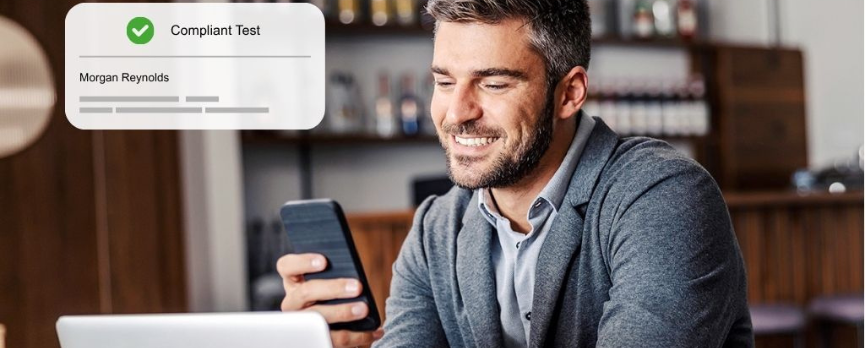
The most trusted tool for this is Soberlink, which combines real-time test results with verified facial recognition and tamper detection, so results are tied to the person taking the test and shared with both partners instantaneously.
That said, monitoring is not a substitute for therapy, accountability, or the slow work of rebuilding trust. As Gerken explains, "Monitoring cannot manufacture trust. A negative alcohol test answers 'Did this person drink?' It doesn't answer 'Can I feel safe with this person again?' That second question still requires accountability, consistency, and therapeutic work."
Monitoring offers objective information, while counseling addresses the deeper questions of trust, boundaries, and what the relationship's future looks like.

Couples who go through this process often come away with:
Brian Lutz sums up the value this way: "Discernment slows that clock down. The value isn't in saving the marriage or ending it. It's in making sure whatever comes next is a decision rather than a reaction."
Whether the road ahead leads to reconciliation or separation, having accurate information along the way matters. If alcohol addiction is impacting the decision to separate, visit Soberlink to see how real-time, objective alcohol monitoring can help.
What is discernment counseling used for?
Discernment counseling helps couples decide whether to stay together, separate, or commit to reconciliation work when one partner is unsure the relationship should continue.
How long does discernment counseling take?
Most discernment counseling processes last between one and five sessions, making it much shorter than traditional couples therapy.
Is discernment counseling the same as couples therapy?
No. Couples therapy assumes both partners want to improve the relationship. Discernment counseling is designed for situations where only one partner is committed to that goal.
Can alcohol monitoring replace counseling during this process?
No. Alcohol monitoring provides objective data about drinking, but it cannot address trust, accountability, or the emotional work needed to move forward.