
Evidence-based care has always been the benchmark of sound clinical practice. Clinicians are trained to follow the data, update their approaches as new research emerges, and hold their tools to the same standard they hold their treatments. In alcohol use disorder (AUD) care, the field has made substantial advances in how it understands, frames, and treats, and the monitoring strategies clinicians and referring physicians rely on should reflect those advances.
A landmark integrative review published in Alcohol and Alcoholism, one of the leading peer-reviewed journals in the field, now provides the most comprehensive picture yet of where the evidence on remote alcohol monitoring actually stands. The findings are instructive for anyone involved in AUD care: not all monitoring tools are created equal, and the research makes a clear case for which technology has earned its place in clinical practice.
The review, led by Navarro-Ovando and colleagues at Amsterdam University Medical Center, synthesized 58 studies published between 2014 and 2024 across three major databases: PubMed, Web of Science, and PsycINFO. Its aim was to take stock of the full landscape of mobile health (mHealth) technologies used in AUD monitoring, including smartphones, wearables, and breathalyzers, and to assess not just how frequently each had been studied, but how well each had actually performed in clinical settings.
That distinction matters. A technology can accumulate a substantial body of research without ever demonstrating clinical utility. The review was designed to surface the difference between tools that have been examined and tools that have been proven. Its conclusions are worth reading carefully.
Across all device categories reviewed, breathalyzers stood out as one of only two technologies that had been successfully applied in clinical trials involving interventions. The review found that evidence supporting mHealth tools for AUD remains uneven across device types, with breathalyzers and smartphones demonstrating greater clinical applicability, while wearables and passive sensing approaches remain largely exploratory. For clinicians making real decisions about patient care, that is not a minor distinction.

It is worth pausing on what the review means by clinical applicability. This is not a measure of novelty, market presence, or research volume. It reflects a tool's demonstrated capacity to function effectively within structured clinical interventions, where patient outcomes are being actively measured and treatment decisions are being made in real time.
Wearable transdermal sensors, for example, have attracted considerable research attention. But the review found that wearables were scarcely tested in intervention contexts, meaning their evidence base, however large, does not yet extend to the settings where clinicians actually work. A technology that performs well in observational studies or feasibility pilots is categorically different from one that has been deployed and validated in randomized controlled trials.
Breathalyzers have crossed that threshold. They have been used successfully in clinical intervention trials, demonstrating both the technical reliability and the practical feasibility required to support evidence-based AUD treatment.
For clinicians and referring physicians committed to aligning their practice with the current state of the science, this is the benchmark that should guide tool selection.
The Navarro-Ovando review also situates remote monitoring within a broader clinical challenge that will be familiar to anyone working in AUD treatment. Dropout rates across AUD treatment programs range from 19 to 34 percent. Approximately 60 percent of patients aiming for abstinence experience a drinking episode within six months of treatment. Even among those who reduce their consumption, a significant proportion continue to engage in moderate- to high-risk drinking. These are not marginal edge cases; they represent the central clinical problem that better monitoring tools are designed to address.
The review draws on existing literature to explain the mechanism: the lapse and relapse process in AUD typically begins with a vulnerable internal state, which is then exposed to high-risk situations that trigger drinking. Identifying those states early, before a high-risk situation becomes a crisis, is where near-continuous monitoring has the most clinical value. Real-time breathalyzer data gives clinicians precisely that visibility, creating a feedback loop between patient behavior and provider awareness that periodic check-ins simply cannot replicate.
Supporting this picture is a randomized controlled trial examining breathalyzer-based remote monitoring paired with contingency management in AUD treatment. Breathalyzer collection adherence rates exceeded 95 percent over the course of the study, and participants in the monitored contingent group achieved abstinence rates of 85 percent, compared to 38 percent in the non-contingent group. The authors noted the procedure's potential for broad dissemination precisely because of its low burden on both providers and patients. High adherence is not incidental to breathalyzer-based monitoring; it is, the data suggests, a defining feature of it.
Any honest clinical discussion of alcohol monitoring has to account for a well-documented reality: patients with AUD will, in many cases, attempt to circumvent monitoring systems. This is not a moral failing unique to this population. It is a behavioral pattern consistent with the neurobiology of addiction, where the drive to use can override even strongly held intentions. Clinicians who treat AUD understand this, and it shapes every aspect of how they structure care.
Self-reported drinking data is subject to significant underreporting in AUD populations. Studies consistently show that patients minimize or misrepresent their consumption, not necessarily out of deliberate deception, but because the cognitive and motivational distortions associated with active addiction affect self-assessment. Monitoring systems that rely on patient self-report therefore introduce a structural reliability problem into the clinical picture.
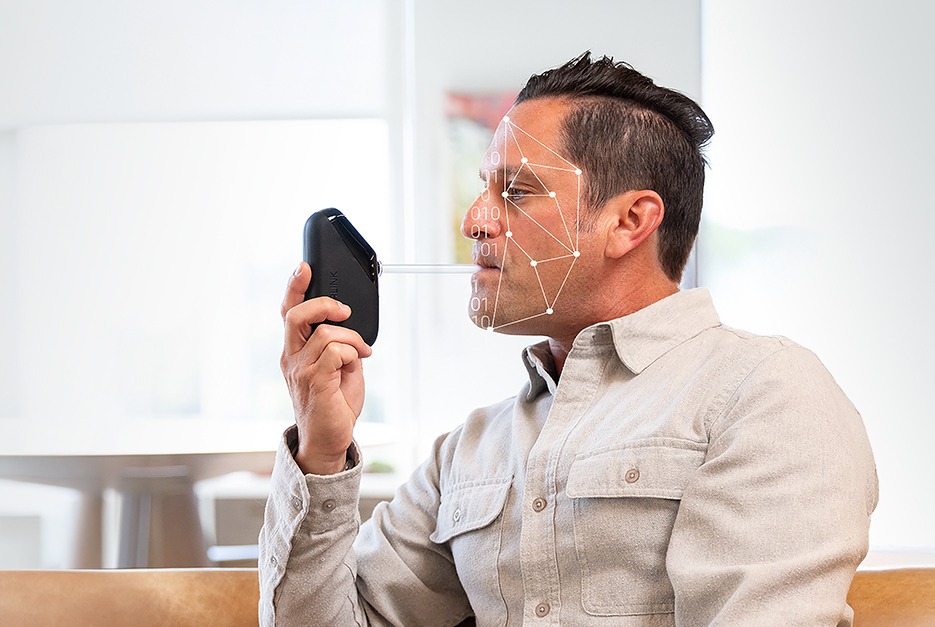
Breathalyzer-based remote monitoring addresses this directly. When a breathalyzer system requires real-time, identity-verified breath samples at scheduled intervals, it removes the patient's ability to substitute compliance theater for actual abstinence. The monitoring is objective, time-stamped, and clinician-visible. This is not about distrust of patients, as any well-versed addiction clinician would understand, it is about designing a tool that holds up under the conditions AUD treatment actually operates in. For the evidence-based clinician, tamper resistance is a necessary validity condition.
The Navarro-Ovando review is not a product endorsement. It is a rigorous synthesis of a decade of clinical research, published in a peer-reviewed journal, that draws an evidence-based line between tools ready for clinical deployment and tools that require further development. That line runs directly through breathalyzer technology.
For clinicians managing AUD as the chronic, relapsing condition it is, the implications are practical. Monitoring is an active clinical intervention, not something passive. The monitoring tool chosen either strengthens the treatment relationship with real data or introduces noise through unreliable, gameable, or unvalidated measurement. Clinicians and referring physicians who have not yet evaluated the current evidence base for their monitoring approach now have a clear and citable reason to do so.
The standard of care in AUD treatment is evolving. The research supporting breathalyzer-based remote monitoring has reached a level of maturity that places it in a different evidence category from the alternatives. Practices that integrate validated remote monitoring are not adding a feature to their workflow; they are making a documented, evidence-aligned commitment to better patient outcomes.

Soberlink is the leading breathalyzer-based remote alcohol monitoring system designed specifically for clinical and treatment settings. Its technology directly addresses the requirements the evidence identifies as essential: real-time breath alcohol testing, facial recognition to verify patient identity at the time of each test, tamper-detection protocols, and a provider-facing dashboard that surfaces results as they happen.
Where other monitoring approaches ask clinicians to trust self-report or rely on tools not yet validated in intervention contexts, Soberlink delivers objective, time-stamped BAC data with the structural safeguards that AUD monitoring requires. Scheduled testing windows eliminate the predictability that undermines many monitoring systems, and real-time alerts ensure that clinicians and treatment teams can respond to results promptly, rather than discovering compliance problems weeks later.
For clinicians ready to align their monitoring practice with the current evidence base, Soberlink offers free professional training designed for clinicians, therapists, and treatment professionals. It is a low-friction starting point for integrating the most clinically validated remote monitoring technology into an evidence-based AUD care model.
The Navarro-Ovando review gives clinicians and referring physicians something concrete to act on: a peer-reviewed, decade-spanning synthesis that distinguishes validated clinical tools from exploratory ones, and places breathalyzer-based remote monitoring at the top of that hierarchy. The opportunity now belongs to the practitioners who are willing to meet the evidence where it is.